A guide to Mykonos Town (Chora) — Little Venice, the windmills, the maze of whitewashed lanes and the best places to eat, shop and watch the sunset.
Mykonos Town (Chora) Guide
Mykonos Town — universally known as Chora, the Greek word for "main town" — is one of the most captivating settlements in the Cyclades. Built by medieval inhabitants who deliberately designed its lanes to disorient pirates, Chora today disorients visitors in the most pleasant way. Give it an afternoon and you will still be finding corners you haven't seen. Give it an evening and you may not want to leave.
Arriving in Chora
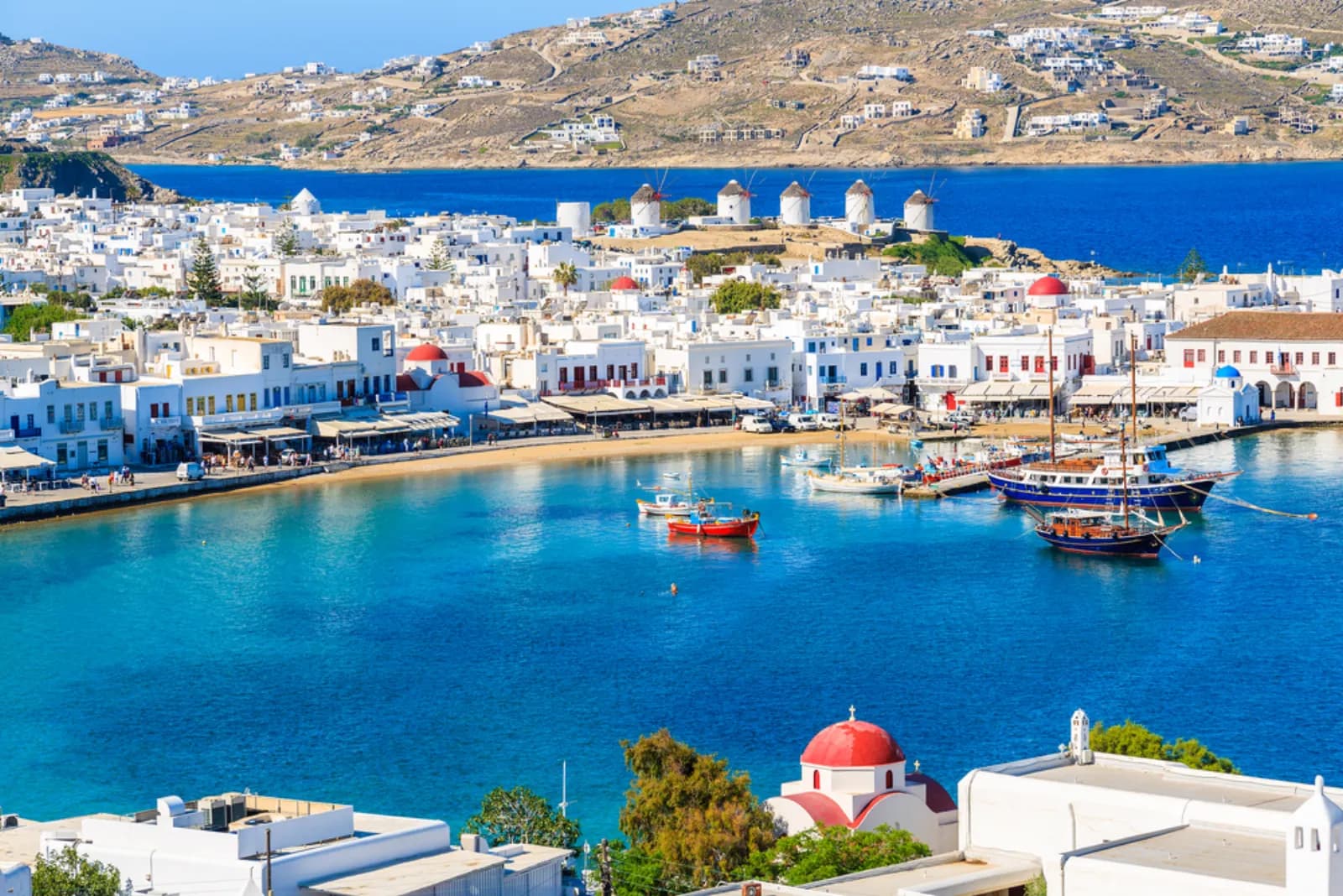
Most visitors encounter Chora from the waterfront, arriving by ferry at the Old Port or by road from the New Port. The harbour front presents pastel buildings, fishing boats, and whitewashed lanes climbing the hillside behind. The historic core is entirely pedestrianised, so leave any vehicle at the edge and walk in.
The Windmills of Kato Mili
The seven windmills on the hill above the southern edge of Chora are Mykonos's defining landmark. Built by Venetians in the 16th century to mill grain, they operated into the early 20th century and today are among the most photographed structures in Greece.
The best views of the windmills come from below — from the Alefkandra waterfront — or from the small esplanade beside them, which looks out over the port and the Aegean. At sunset this spot becomes genuinely magical: the white walls glow amber and the town below fills with the sound of evening preparations. For photography tips and the optimal visit times, the pictures of Mykonos guide covers this in detail.
Little Venice (Alefkandra)
Immediately below the windmills lies Alefkandra — better known as Little Venice for the way its old buildings sit directly over the sea, wooden balconies hanging above the waves. This is the most atmospheric corner of Chora, and the concentration of bars and cafés along its waterfront makes it one of the best places on the island to watch the sun go down.
The 180 Sunset Bar is among several venues here that fill up as sunset approaches. Reservations or early arrival are advisable in peak season.
The Labyrinth of Lanes
Chora's street layout is its most distinctive feature and its greatest pleasure. The lanes were built without a grid — paths curve, split, and double back in patterns that confuse any mental map within minutes. This was intentional: attacking pirates would become trapped in the maze.
The result for modern visitors is a neighbourhood that rewards wandering:
- Matogianni Street is the main commercial artery, lined with boutiques, jewellers, and designer labels
- Back lanes hold smaller shops, local bakeries, and residences draped in bougainvillea
- Small churches appear every few metres — Mykonos has more than 400 within the municipality, many of them tiny private chapels
- Cats occupy nearly every sunny wall and doorstep; they have been here as long as the boats
Getting lost is part of the plan. If you need to reorient, head uphill toward the windmills or downhill toward the sound of the harbour.
Paraportiani Church
The most famous church in Chora is Paraportiani, set on a small promontory near the port. Technically five chapels merged over several centuries, the resulting structure is a lumpy, organic white mass that looks unlike anything planned on paper. The name means "beside the gate," referring to its position next to the former entrance of the old Venetian castle.
Visit in the morning for the best light on the facade and the fewest visitors. The church is occasionally locked, but the exterior is the main draw.
Shopping in Chora
The old town has evolved into one of Greece's premier shopping destinations. Matogianni and the surrounding streets carry international luxury brands, locally crafted jewellery in gold and silver with Cycladic motifs, ceramics, linen, and art galleries representing local and international artists. Smaller, independent boutiques tucked into the back lanes are often more interesting — and better value — than the main strip.
Where to Eat and Watch the Sunset
Restaurants in Chora range from gyros spots to proper fish tavernas. Venues on the main tourist lanes charge a premium; two alleys back, quality is similar at lower prices. For a destination experience outside town, Scorpios is worth knowing for a full afternoon-to-evening occasion.
For sunset, the windmills esplanade and Little Venice waterfront are the most popular spots. The Kastro area above Little Venice offers slightly elevated views across the rooftops with fewer crowds.
For a full day beyond Chora, the Mykonos beaches guide and getting around Mykonos cover transport and beach choices.
Frequently Asked Questions
What is the difference between Mykonos Town and Chora? They are the same place. Chora is the Greek term for the main settlement of an island. In Mykonos, as on many Greek islands, locals call it Chora while tourist materials also use Mykonos Town. The windmills, Little Venice, Paraportiani, and the shopping lanes are all within Chora.
How long do you need to explore Chora? A leisurely half-day covers the main highlights. A full day including shopping, lunch, and returning for sunset is an excellent way to spend one of your days. The how many days in Mykonos guide helps allocate time across the whole island.
Is Mykonos Town walkable? Entirely. The historic core is pedestrianised and compact enough to cover on foot. Comfortable shoes matter — the uneven cobblestones make heels impractical, regardless of what you may have seen in fashion shoots.
Book your Mykonos tours & excursions
Boat cruises, Delos day trips, private guides and more — with live availability, instant confirmation and free cancellation on most tours.