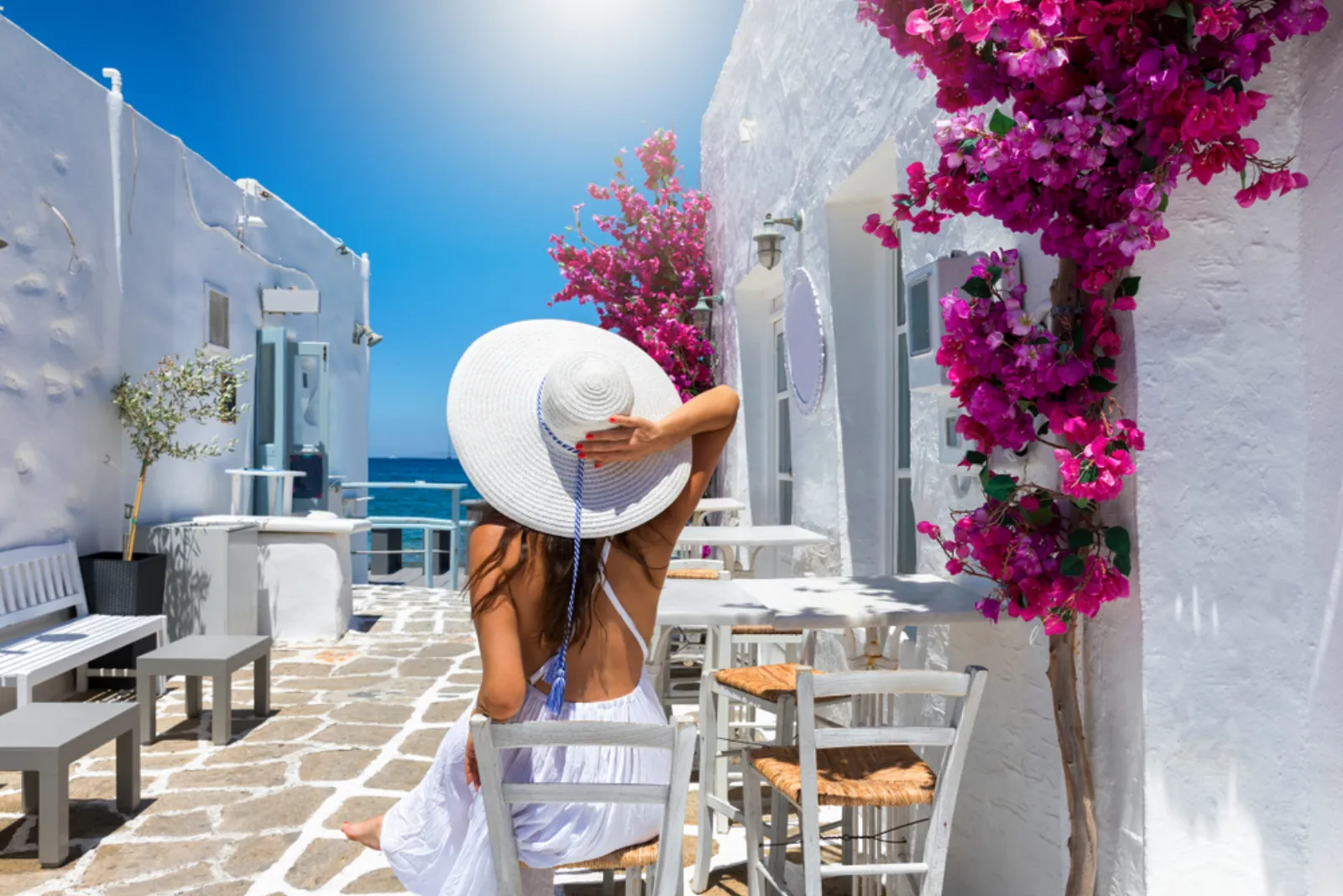
Essential Mykonos travel tips — money, language, getting around, etiquette and the practical things to know before your first visit to the island.
Things to know before you go to Mykonos
Mykonos rewards visitors who arrive prepared. The island is well set up for international tourism, but there are enough practical quirks — the wind, the narrow roads, the seasonal rhythms — that a little foreknowledge goes a long way. Here is what first-time visitors consistently wish they had known.
Money and cards
Greece uses the euro. Credit and debit cards are widely accepted at hotels, restaurants and shops in Mykonos, including most tavernas. That said, carry some cash for small purchases, local buses, market stalls and the occasional older establishment that has not yet moved to card-only payments. ATMs are available in Mykonos Town and in several of the larger villages — withdraw cash when you see one rather than hunting for it when you need it.
Budget honestly. Mykonos is one of the more expensive Greek islands, and prices in July and August are substantially higher than the shoulder season. Cocktails at beach clubs, sun-lounger rentals and meals at well-known restaurants all carry a significant premium. Our Mykonos on a budget guide covers where you can economise without sacrificing the experience.
Language
Greek is the official language. English is widely spoken at hotels, restaurants and tourist businesses across the island — you will rarely need Greek to get by. That said, a few words go a long way: yeia sas (hello/goodbye, formal), efcharistó (thank you) and parakaló (please/you're welcome) are appreciated by locals and set a friendly tone.
Getting around
Mykonos is small but its roads are narrow, winding and busy in summer. Options for getting around include:
- Taxis: Available from the main stands in Mykonos Town and the port, but in peak season queues can be long and waits frustrating. Book through the official taxi app where possible.
- Local buses (KTEL): Inexpensive and surprisingly reliable. Two main hubs — Fabrika Square and the Old Port — connect to most of the island's beaches and villages. Cash fares are low.
- Scooters and ATVs: The most flexible way to explore beyond the main bus routes. Rental is straightforward; see our essentials page for what to know before renting. A valid licence for the category you are renting is required.
- Water taxis: In summer, small boats run between the town beach and the southern beaches — a scenic and practical option.
Our full getting around Mykonos guide covers schedules, costs and tips in detail.
Book ahead — seriously
This cannot be overstated for a summer visit. In July and August, the most popular restaurants, beach clubs and hotels are fully committed weeks or even months in advance. Arrive without reservations and you will either queue, settle for less or pay walk-in premiums.
- Hotels: Book three to six months ahead for high season. Properties like Cavo Tagoo and Myconian Avaton fill earliest.
- Restaurants: Reserve two to four weeks out for well-known spots. For Scorpios or similar beach-club dining, even longer.
- Beach clubs: Sun-lounger reservations at Nammos and Super Paradise are often required in peak summer.
- Delos ferries: Boats run from the Old Port on a set schedule. No advance booking is usually needed, but check times and go early — afternoon crossings can fill up.
The meltemi wind
The meltemi is a strong, dry north wind that blows across the Aegean, most powerfully from mid-July through August. On Mykonos it is simply part of summer life. It keeps temperatures bearable but can make certain beaches choppy and unpleasant — north-facing beaches are most affected. South-coast beaches like Ornos and Principote are more sheltered. The meltemi can also delay or cancel ferry connections to Delos and other islands, so build flexibility into any plans that depend on boat travel.
Sun protection
The Aegean sun in summer is intense. UV levels are high from May through September. Sunscreen with a high SPF, a hat and sunglasses are essentials, not optional extras. The combination of reflected sea light and the cooling effect of the meltemi can make it easy to underestimate how much sun you are getting — be especially careful on your first full beach day.
Dress code and etiquette
Mykonos is a liberal, welcoming island with no meaningful dress code for most situations. It has been an LGBTQ+-friendly destination since the 1970s and remains one of the most inclusive holiday destinations in Europe. Beachwear is appropriate at the beach and by the pool; cover up with a light layer when walking into town or entering churches. A few older churches and the monastery of Panagia Tourliani in Ano Mera ask for covered shoulders and knees — carry a scarf or light shirt.
Tipping is customary but not obligatory. Rounding up or leaving 10% at restaurants is standard practice and appreciated. At beach clubs with table service, a small tip for the staff is the norm.
What to pack
Beyond the obvious beach kit, a few things that first-time visitors often overlook:
- A windproof layer for evenings. Even in August, evenings in Chora can feel breezy. A light jacket is useful.
- Comfortable walking shoes. The cobblestones of Chora are uneven and sometimes slippery. Flip-flops are fine for the beach; trainers or flat sandals with grip are better for town.
- A reusable water bottle. Tap water on Mykonos is technically drinkable but most locals and visitors use bottled water. Staying hydrated in summer heat is important.
- Portable charger. Long beach days and late nights drain phones fast.
Staying connected
Mobile coverage on the island is good. EU roaming rules mean European visitors pay domestic rates. Visitors from outside the EU should check data costs with their provider before arrival or pick up a Greek SIM on arrival. Most hotels and restaurants offer free Wi-Fi.
Frequently asked questions
Do I need to speak Greek to visit Mykonos? No. English is spoken almost universally across the tourist areas of the island. Staff at hotels, restaurants and transport services are accustomed to international visitors, and signage in key areas is bilingual. Learning a few basic Greek phrases is appreciated but never expected.
Is Mykonos safe for solo travellers? Yes. Mykonos is a very safe destination for solo travellers of all backgrounds. Petty theft at busy beaches (phones, wallets left unattended) is the main risk — use your hotel safe and keep valuables with you. The island has a strong tourism infrastructure and a visible police presence in peak season.
When should I book my trip to Mykonos? As early as possible for July and August — ideally four to six months ahead for accommodation, and several weeks ahead for popular restaurants. Shoulder-season visitors (May, June, September, October) have more flexibility, but booking three to four weeks out for accommodation and a week or two for restaurants is still sensible. See our full best time to visit Mykonos guide for seasonal advice.
Book your Mykonos tours & excursions
Boat cruises, Delos day trips, private guides and more — with live availability, instant confirmation and free cancellation on most tours.