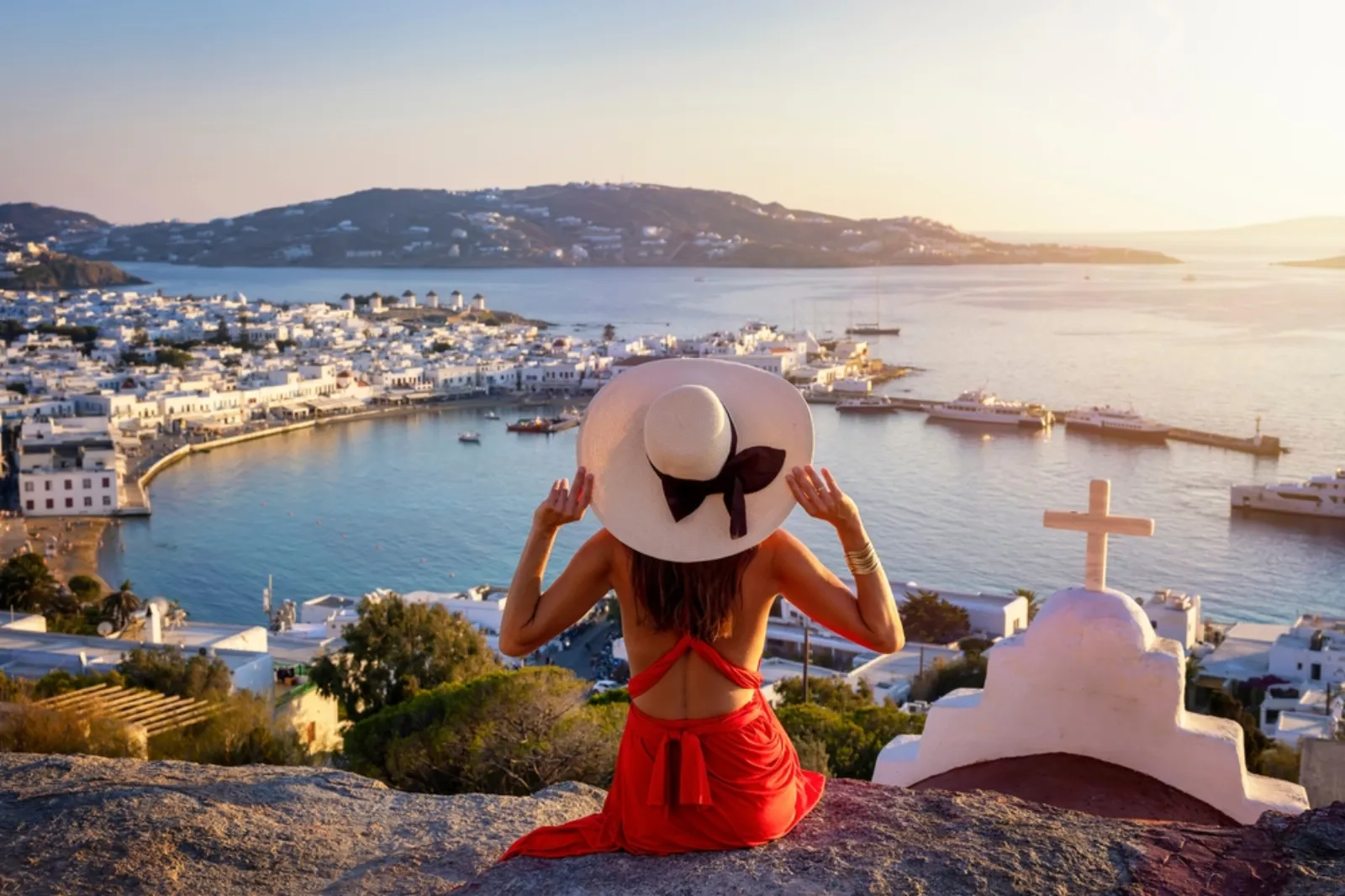
The best time to visit Mykonos, month by month — weather, sea temperature, crowds and prices — so you can pick the perfect dates for your trip.
Mykonos by season: an honest overview
Mykonos has a classic Mediterranean climate — hot, dry summers and mild, wetter winters — but choosing when to visit involves more than checking a weather forecast. Season shapes prices, crowd levels, opening hours and the overall mood of the island just as much as temperature does.
Month-by-month breakdown
January and February — off-season quiet
Most of the island is closed. Hotels, beach clubs and many restaurants shut down, and Chora is left to locals. Temperatures hover around 12–15°C, with occasional rain and strong winds. The Armenistis Lighthouse and the old town are still worth a wander, but you will not be swimming. Only visit if you are a researcher, a long-term renter, or genuinely curious about the island outside tourism.
March and April — tentative reopening
The island begins to stir. Some hotels and restaurants reopen by Easter (a major Greek holiday), and spring wildflowers carpet the hillsides. Days can reach 18–20°C, sea temperatures are still cool at around 16°C, and crowds are thin. Prices are among the lowest of the year. A good option for travellers who want the scenery without the scene.
May — the sweet spot begins
May is widely regarded as one of the best months to visit Mykonos. Temperatures climb to a comfortable 22–25°C, the sea warms towards 20°C and most of the island's businesses are open and operating smoothly. Crowds are present but manageable. You can get a sun-lounger at Ornos Beach without a reservation, walk Chora without being swept along by a crowd, and dine without weeks of advance booking. Prices are noticeably lower than peak season.
June — the ideal balance
June delivers nearly everything Mykonos promises: warm, sunny days (26–28°C), a sea that is genuinely pleasant to swim in (around 22°C), and an atmosphere that is lively but not overwhelming. The beach clubs and the Principote crowd are energetic. Most restaurants and hotels are fully staffed. It is, for many experienced visitors, the single best month — shoulder-season prices with summer-level experience.
July and August — peak season
This is Mykonos at full throttle. Temperatures regularly exceed 30°C and the meltemi — the strong, dry north wind — blows hard, particularly in August. It cools things down but can make some north-facing beaches choppy and unusable. Sea temperatures peak at around 25–26°C.
The good: Super Paradise Beach Club and Nammos are at their most electric; Scorpios hosts its best parties; the ferry connections to Delos run daily.
The reality: accommodation prices are at their highest of the year, booking anything without months of advance notice is difficult, Chora is genuinely very busy, and queue times for ferries and taxis test patience. Top hotels like Cavo Tagoo are fully booked by spring. For everything you need to know about peak season logistics, read our getting around Mykonos guide.
September — the other sweet spot
September is arguably even better than June for many travellers. The sea retains its summer warmth (around 24–25°C), temperatures ease to a very pleasant 25–27°C, and the meltemi dies down. Crowds thin noticeably after the first week. Prices begin to drop while nearly everything remains open. Sunsets grow more golden. It is a compelling month for couples and anyone who wants beach-club atmosphere without August's intensity.
October — quieter shoulder season
October still offers warm days (20–23°C) and swimmable seas in the first half of the month. Many businesses begin closing from mid-October onwards. The island takes on a more local, unhurried character. Prices fall considerably. Good for travellers who prioritise value and calm over buzz.
November and December — winding down
November sees widespread closures. A handful of year-round restaurants and hotels remain open in Chora, and the town's Christmas decorations give December a certain charm, but this is not a beach holiday in any realistic sense.
Quick reference: season summary
| Period | Weather | Crowds | Prices | Best for |
|---|---|---|---|---|
| May | Warm, sunny | Low–moderate | Moderate | Value + experience |
| June | Hot, sunny | Moderate | Moderate–high | Best overall balance |
| July–Aug | Very hot, windy | Peak | Highest | Nightlife, beach clubs |
| September | Warm, calmer | Moderate | Moderate | Couples, beach lovers |
| October | Mild | Low | Lower | Quiet exploration |
| Winter | Cool, some rain | Very low | Lowest | Off-season only |
Planning around the meltemi
The meltemi is a strong, predictable north wind that blows across the Aegean from mid-July into August. On Mykonos it affects north-facing beaches most, and it can disrupt ferry schedules. South-facing beaches like Ornos and Principote are more sheltered. Factor it into your beach choices if you visit in peak summer.
Frequently asked questions
What is the best month to visit Mykonos? June and September consistently top the rankings for most travellers. Both offer warm, sunny weather, a swimmable sea, fully open businesses and noticeably smaller crowds and lower prices than July and August. If you can only go in peak summer, early July is preferable to August for crowds and wind.
Is Mykonos good in May? Yes — May is an excellent time to visit. The weather is warm and settled, the sea is approaching swimming temperature and the island has woken up from winter without yet being overwhelmed by summer visitors. It suits travellers who want value, space and a relaxed pace.
How far in advance should I book for summer? For July and August, book accommodation three to six months ahead, especially for popular properties. In-demand restaurants and beach clubs often take reservations weeks out. Shoulder-season visits (May, June, September, October) need less forward planning, though booking a few weeks ahead is still sensible for the better-known hotels. See our guide on where to stay in Mykonos for area-by-area recommendations.
Book your Mykonos tours & excursions
Boat cruises, Delos day trips, private guides and more — with live availability, instant confirmation and free cancellation on most tours.